OPEN POSITIONS:


KFBRP SAFETY & PROGRAM ASSOCIATE II 

2026-2027 PCSU POST-DOCTORAL FELLOWSHIP AT UNIVERSITY OF HAWAIʻI AT MĀNOA

Scroll down for full position descriptions.

KFBRP SAFETY & PROGRAM ASSOCIATE II – ID# 226377.

CLOSING DATE:  July 20, 2026. Job postings are removed from the RCUH Job Openings site once the recruitment process has ended. INQUIRIES:  Lisa Crampton 808-631-6761 (Kauai). 

Regular, Full-Time, Limited-Term (not to exceed two (2) years in duration from date of hire), RCUH Non-Civil Service position with the Pacific Cooperative Studies Unit (PCSU), Kauai Forest Bird Recovery Project (KFBRP), located in Kaumakani, Kauai. Continuation of employment is dependent upon program/operational needs, satisfactory work performance, availability of funds, and compliance with applicable Federal/State laws.

MONTHLY SALARY RANGE: $3,927 – $4,071/Mon.

DUTIES: Maintains the KFBRP inventory system and database including tagging of incoming items, and organization of the storage areas. Maintains a proactive list of inventory items needed for purchase. Responsible for supporting safe field operations for Kauai Forest Bird Recovery Project. Develops and refines safety and field operation methodology as needed to achieve desired objectives. Serves as KFBRP Safety Officer and plans, adapts, and implements systems and protocols (SOPs) for safe field operations for all KFBRP projects. Works with field staff to ensure quality control and safety of all operations. With KFBRP Manager, submits injury reports and follows up on personnel issues involving field operations. Trains new staff, tracks all staff training and assists staff in maintaining all certifications and trainings. Helicopter Manager for KFBRP operations. Records and reports safety issues and creates and implements resolution process. Conducts field research and management projects for the recovery of Kauai’s endangered bird species and deployment of landscape level mosquito control. Conducts all operations according to accepted safety standards and established protocols. Drives project vehicles both on and off road and works in and around helicopters. Frequent helicopter and occasional inter-island travel, and frequent camping for up to eight (8) days in remote field sites required as part of duties. This is a progression series job in which the employee will be expected to perform with increasing independence on progressively responsible duties. Quantity and quality of work is expected to increase as levels increase. Progression from one (1) level to the next is not dependent on time-in-grade, rather upon employee’s demonstrated abilities, competence, and operational needs.  Through experience, demonstrated competence, and operational needs, may be hired at the appropriate level.

PRIMARY QUALIFICATIONS:

EDUCATION
Associate’s Degree from an accredited community college.
EXPERIENCE
Progression job with minimum experience requirements for Level I, and combination of experience and demonstrated competence and abilities for Levels II, III. Employee starts at Level I, unless justified and qualified to start at a higher level. Progression from one (1) level to the next is not dependent on time-in-grade, rather upon employee’s demonstrated abilities, competence, and operational needs. Three to five (3-5) years of experience working in the field and tracking inventory and expenditures. Includes one to two (1-2) years of experience operating a UAS.
KNOWLEDGE
Good knowledge of field work, workplace safety  and tracking inventory practices.
ABILITIES & SKILLS
Excellent organizational, leadership, public relations, and communication skills as well as strong problem-solving, decision-making, interpersonal and management skills. Demonstrated proficiency in following project’s operational, and safety protocols including proper use and storage of pesticides and use and maintenance of project gear and equipment. Ability to accurately collect and store data for target species survey and control activities and train staff in these activities. Ability to operate and maintain small-mechanized equipment and train staff in use. Ability to organize and summarize data and write clear and concise reports. Ability to safely coordinate and manage helicopter operations involving the transportation of staff and field equipment (using external sling loads) to remote sites. Ability to communicate well with partners. Ability to take detailed field notes and follow a prescribed data collection system, and perform data entry into spreadsheets and databases. Basic mechanical and electrical skills for maintaining project equipment, field camps, and vehicles. Basic computer skills. Computer literacy and proficiency with Microsoft programs. Ability to communicate effectively both orally and in writing. Ability to navigate in remote areas with and without a Global Positioning System (GPS) unit. Must possess a valid driver’s license (and if use of personal vehicle on the job is required, must also have valid personal driver’s insurance equivalent to Hawai‘i’s No-Fault Driver’s Insurance) and maintain throughout the duration of employment. Must be able to drive a 4-wheel drive vehicle in off-road conditions. Post Offer/Employment Condition: Must possess Certification in First Aid/CPR (or be able to obtain the certificate following the training provided within three (3) months from date of hire) and maintain throughout duration of employment. Must be able to complete helicopter manager and flight follower courses within twelve (12) months from date of hire. Must complete the online Hazard Communication training immediately after hire or no later than employee’s initial exposure to hazardous chemicals. Must be able to obtain UAS license within twelve (12) months from date of hire. Must be able to obtain and maintain State of Hawai‘i Certification for Application of Restricted Use Pesticides within six (6) months from date of hire and maintain throughout duration of employment.
PHYSICAL/MEDICAL DEMANDS
Work will be done in the office as well as in remote field areas. Ability to conduct fieldwork in high elevation forest (up to 6,500 feet) under cold, wet, and extremely rugged field conditions. Ability to hike on poor footing conditions for eight to ten (8-10) miles, carrying loads up to fifty (50) pounds unassisted. Ability to live and work in remote field camps under primitive conditions in close quarters with other individuals for up to eight (9) consecutive days.
POLICY/REGULATORY REQUIREMENT
As a condition of employment, employee will be subject to all applicable RCUH policies, procedures, and trainings and, as applicable, subject to University of Hawai‘i’s and/or business entity’s policies, procedures, and trainings.  Violation of RCUH’s, UH’s, or business entity’s policies and/or procedures or applicable State or Federal laws and/or regulations may lead to disciplinary action (including, but not limited to possible termination of employment, personal fines, civil and/or criminal penalties, etc.).

SECONDARY QUALIFICATIONS: 

Experience working with endangered species and experience with the control of invasive species in Hawaiʻi. Hawaiian bird survey experience. Interagency Aviation Training. UAS Certification.

APPLICATION REQUIREMENTS: Please go to https://www.rcuh.com/opportunities/job-openings/. You must submit the following documents online to be considered for the position: 1) Cover Letter, 2) Resume, 3) List of Professional References, 4) Copy of Degree(s)/Unofficial or Official Transcript(s)/Certificate(s). All online applications must be submitted/received by the closing date (11:59 P.M. Hawai‘i Standard Time/RCUH receipt time) as stated on the job posting. If you do not have access to our system and the closing date is imminent, please send additional documents to rcuh_recruitment@rcuh.com. If you have questions on the application process and/or need assistance, please call (808)956-7262 or (808)956-0872. Please visit https://www.rcuh.com/policies-forms-documents/benefits-at-a-glance.pdf for more information on RCUH’s Benefits for eligible employees.

RCUH’s mission is to support and enhance research, development and training in Hawai‘i, with a focus on the University of Hawai‘i.

RCUH is an equal opportunity employer and all qualified applicants will receive consideration for employment without regard to race, color, religion, sex, sexual orientation, national origin, ancestry, age, disability, genetic information, pregnancy, marital status, reproductive health decision, citizenship, gender identity or expression, domestic or sexual violence victim status, military/veteran status, or other grounds protected under applicable federal and state laws, except as permitted by law.

2026-2027 PCSU POST-DOCTORAL FELLOWSHIP AT UNIVERSITY OF HAWAIʻI AT MĀNOA

Advancing mosquito suppression to protect Hawaiian Forest Birds – analysis of existing data and finalizing monitoring plans

Summary:

There is an urgent need to significantly reduce the threat of avian malaria on Hawaiian forest bird species of greatest conservation need by developing tools to control the mosquito vector, Culex quinquefasciatus (Culex). Efforts are ongoing to perfect the application of two mosquito control tools in Hawai’i: 1) the incompatible insect technique (IIT) using the cytoplasmic endosymbiotic bacteria Wolbachia, and 2) aerial application of biolarvicide Bacillus thuringensis israelenis (Bti). Pilot data have been collected on both projects and efforts to standardize monitoring and data analysis frameworks and protocols are underway. PCSU seeks a post- doctoral associate to help finalize successful protocols to apply these tools in selected areas on Kauaʻi and Maui, while analyzing existing and incoming data on mosquito abundance and fecundity in treatment and control areas, mosquito demography, disease prevalence, and avian survival.

Based primarily at the Kauaʻi Forest Bird Recovery Project (KFBRP) and in coordination with labs at UH Manoa and Hilo, the post-doctoral associate will be mentored by Drs. Lisa Crampton, Matt Medeiros, and Shaya Honarvar. Duties will include:

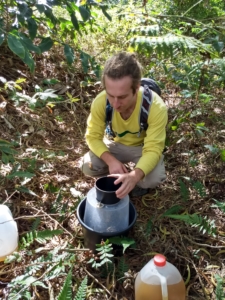
1) Study efficacy of Bti deployment by participating in the monitoring and collection adult and larval mosquitoes and egg rafts in treatment and control areas

2) Work with partners to finalize experimental design, data collection and analysis protocols to monitor the efficacy of the aerial application of Bti and assess key mosquito demographic partners on Kauaʻi and Maui.

a. Methods used will include classic mosquito trapping and larval surveys.

b. The postdoc will also help advance the use of novel tools such as eDNA to assess mosquito occupancy and non-target effects and stable isotope isoscapes and cuticular hydrocarbons to assess the relative contributions of immigration and local production to mosquito populations occurring in forest bird areas.

3) Maintain the KFBRP mosquito database by proofing and querying data. Make maps in GIS to support field work.

4) Act as a key member of the teams analyzing field data on mosquito abundance and fecundity in treatment and control areas, mosquito immigration, mosquito and avian disease prevalence, and avian survival. Analyze and interpret Bti application and monitoring data in reports, including spatial analysis and presentation.

5) Draft scientific papers for presentation at meetings and in peer-reviewed journals.

6) Represent the projects, associate labs, and Birds, Not Mosquitoes to the public and at stakeholder forums.

The fellowship will include $80,000/yr for 18 months, with possibility of extension, beginning September 2026 (Location: Kauaʻi and ‘Oahu with occasional travel to Maui).

Applications for this award should be sent to (crampton@hawaii.edu) in electronic format as a PDF file. They are due by 5 pm HST July 20, 2026. No late submissions will beaccepted. Please put PCSU POSTDOCTORAL AWARD-[APPLICANT LAST NAME] in the subject line of the email.

Eligibility:

Applicants must have a Doctoral Degree from an accredited college or university in Entomology, Agriculture, Biology, Zoology, Conservation Biology, Ecology or related fields. Three to five (3-5) years of experience designing, leading, conducting and analyzing biological field research in entomology, invasive species management, or conservation management. The applicant must have working knowledge in the principles and techniques of conservation management, remote field operations, and invasive species biology. Working knowledge of natural history relevant to native Hawaiian wildlife, or similar environments. Proficient knowledge of techniques used to inventory and monitor insects and wildlife, and other natural resource assets, including experimental design, databases, GIS, and statistical data analysis. Able to conduct and lead statistical and spatial data management and analysis, and demonstrated ability in publishing peer- reviewed scientific papers and in making presentations for scientific and public audiences.

Please include:

1. 2. A CV of the applicant (3 pages maximum), including date of Ph.D. receipt. A statement (3 pages maximum), describing any contribution the applicant has made to diversity in the sciences while also speaking on the following points:

Strong ability to solve logistical problems and problems related to biological threats.

Prior experience developing research and monitoring protocols

Ability to conduct and lead statistical and spatial data management and analysis.

conduct and lead statistical and spatial data management and analysis.

Ability to provide guidance, motivate, and engage field crews through effective communication and leadership.

3. Two letters of recommendation, including one from the applicant’s primary Ph.D. advisor.

Please contact crampton@hawaii.edu with questions. Please send all documents (excepting references, which may be sent separately) as a single PDF to crampton@hawaii.edu. Please title the PDF as [APPLICANT LAST NAME] PCSU POSTDOCTORAL.