Raise your leo: Kauaʻi Mosquito Suppression
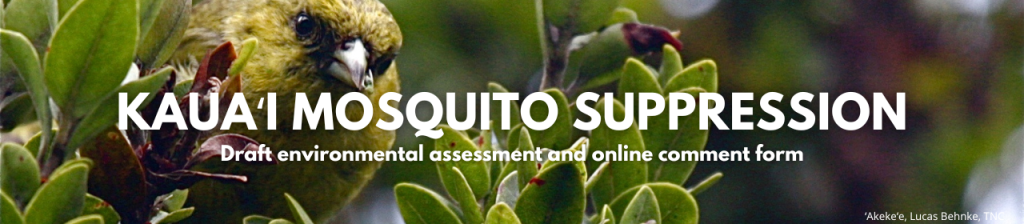
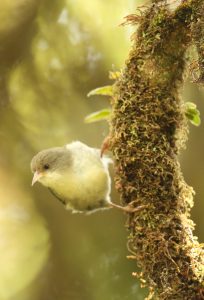
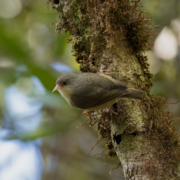
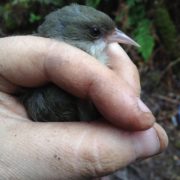
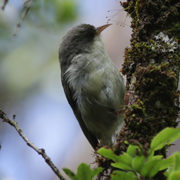
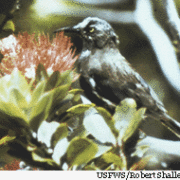
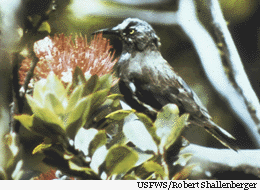
An image of an ʻakekeʻe

About the project

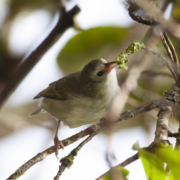
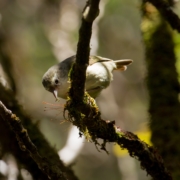
An image of an ʻakikiki

ʻAkikiki, and endangered Kauaʻi forest bird. PC: Justin Hite, Kauaʻi Forest Bird Recovery Project

Hawaiʻi’s forest birds are facing an extinction crisis. Avian malaria transmitted by non-native mosquitoes has decimated native forest bird populations. Of Kauaʻi’s 16 native honeycreepers, 10 have gone extinct. Of the remaining birds, the ʻakikiki is predicted to go extinct by 2025 and the ʻakekeʻe by 2034 (Paxton et al. 2022; see EA for full citation).

The Department of Land and Natural Resources (DLNR) and U.S. Fish and Wildlife Service (USFWS) propose using the Incompatible Insect Technique (IIT) to reduce mosquito populations within approximately 59,204 acres of forest reserves, state parks, and private lands in the Kōkeʻe and Alakaʻi areas of Kauaʻi. This project is intended to suppress mosquitoes known to transmit diseases to native forest birds in critical higher-elevation native forest habitat.

The USFWS and DLNR are preparing a joint environmental assessment (EA) to address the impacts of the release of male mosquitoes with incompatible Wolbachia in the Kōkeʻe and Alakaʻi Wilderness areas. This EA provides background information concerning IIT and outlines the proposed action, potential impacts, and strategies to avoid and minimize potential negative effects of the proposed release of incompatible male mosquitoes within the project area on Kauaʻi. The EA is available below.

Both DLNR and USFWS are members of Birds Not Mosquitoes, a multi-agency partnership urgently working to protect the native Hawaiian honeycreepers from extinction. In addition to the EA below, users may want to review the educational information on this partnership site, including a description of how IIT functions, and answers to Frequently Asked Questions about protecting Hawaiʻi’s birds through mosquito control. Users interested in native birds can explore our native bird profile pages.

Read the draft Environmental Assessment

The draft environmental assessment will be available for public comment for 31 days, June 23 to July 24, 2023. The document is available at the following link:

Hard copies are available for review at the Hawaiʻi Document Center and the Waimea, Līhuʻe and Princeville branches of the Hawaiʻi State Public Library.

Raise your leo and submit a comment

In order to be considered, comments must be received on or before July 24, 2023. All comments and materials received will become part of the public record associated with this action. Comments can be submitted in multiple ways:

    • Online via the comment form here.
    • Via email to mosquitocontrol@hawaii.gov
    • Via mail, postmarked by July 24, 2023, to: Department of Land and Natural Resources, Division of Forestry and Wildlife, Attn: Mosquito Control Project, 1151 Punchbowl Street, Room 325, Honolulu, HI 96813
    • In writing at a public meeting on July 11, 2023, from 5:00 p.m. to 7:00 p.m., at the Kauaʻi Philippine Cultural Center, 4475f Nuhou St, Lihue, HI 96766
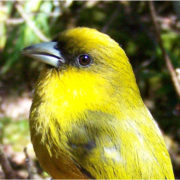
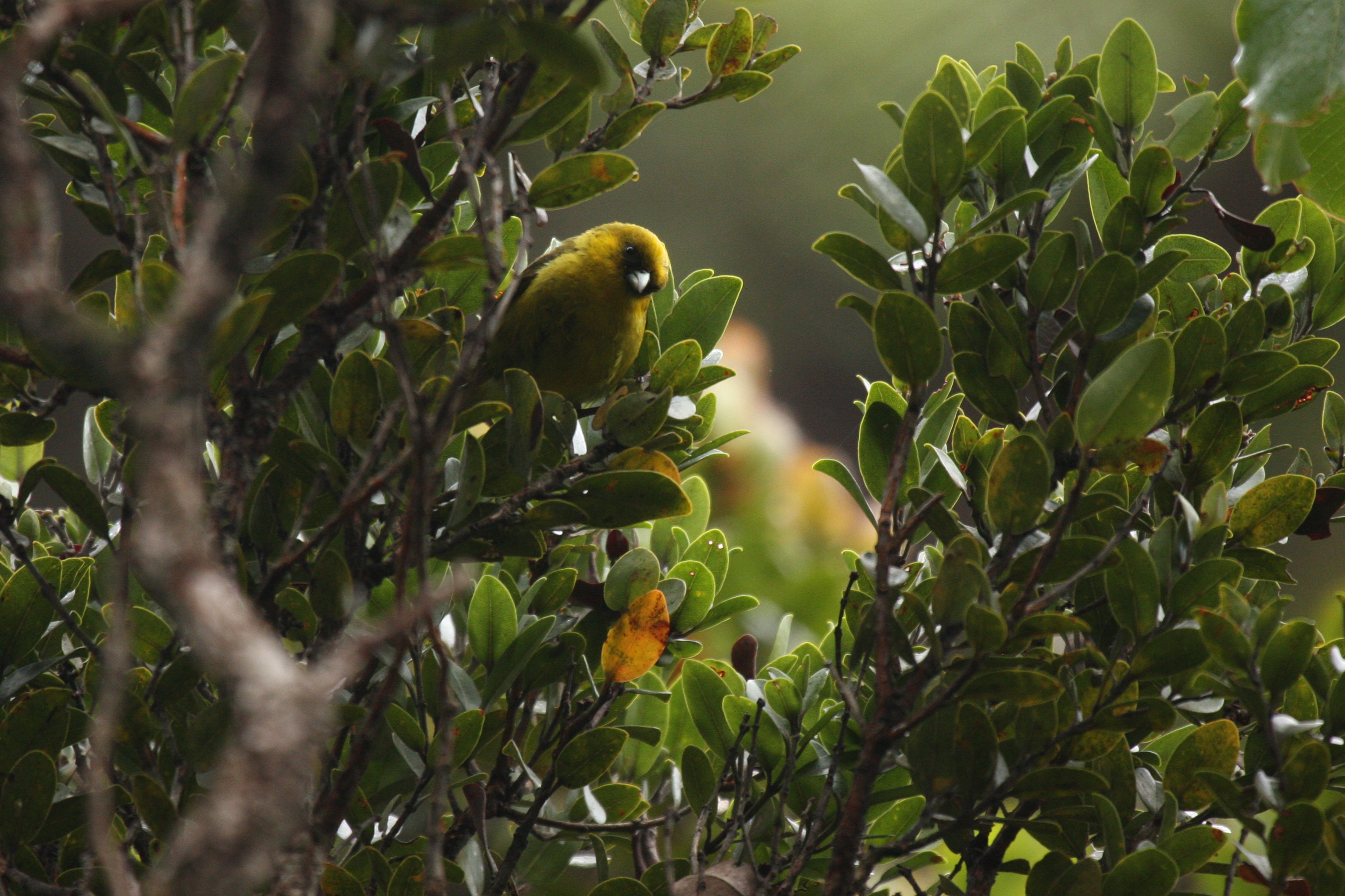
Featured in Ka Wai Ola: Native Hawaiian Forest Birds Fight For Survival

Check out this cover feature in the OHA newsletter, written by Lisa Eller, discussing why Kauaʻi’s highly endangered ʻakikiki and akekeʻe face extinction without intervention. You can view the article at KAWAIOLA NEWS.

KAUA‘I TEAM TRYING TO SAVE NATIVE HONEYCREEPERS PRESSES ON

(ALAKA‘I PLATEAU, KAUA‘I) – From a remote camp, perched on a  narrow 3,000-foot cliff, near the top of Wainiha Valley, Justin Hite, and his team from the Kaua‘i Forest Bird Recovery Project (KFBRP), are in the midst of another field season. A season, that is probably the last for the diminutive native Hawaiian honeycreeper, the ‘akikiki.

“This is one of the last places where we’re still seeing a ton of native forest birds, where everywhere else, just in the last couple of years they’ve quickly and suddenly vanished. And we think it’s because of mosquitoes,” Hite explained during a recent eight-day-long egg collection trip.

The usually upbeat and hopeful KFBRP Field Supervisor has lost some of his optimism this season, as before their very eyes he and his crew are likely seeing the last ‘akikiki remaining in the wild. It’s not unexpected, as other members of KFBRP have been documenting increases of disease-carrying mosquitoes on the plateau.

Regulators are on the verge of approving landscape control of mosquitoes in the mountains of Kaua‘i using the Incompatible Insect Technique (IIT),  to reduce the likelihood that forest birds will be impacted by avian malaria, carried by female mosquitoes.

While permitting and approval is underway, the KFBRP team continues work in what is arguably some of the toughest terrain around.

Robby Kohley, Director of Aviculture with Pacific Rim Conservation, is the on-site expert working with the forest bird team in the Mohihi region of the plateau.

He’s worked across the Hawaiian Islands and in Alaska and commented, “Each project comes with a different set of challenges. The logistics problems of this project are quite high. Between the weather (mostly wet, muddy, and incredibly steep), and the lack of luck ‘akikiki are having with nests this year, I’d say this one ranks really high on the challenge scale.”

Since late January the recovery teams have been flying into the field, hiking to field camp, and then from there trudging through knee deep mud on unimproved pig trails to reach ‘akikiki nests that had been previously spotted.

Using a camera, mounted on a long pole, they’re able to see the condition of the tiny eggs. If they appear to be in good shape, they then rig up a tethered ladder system to get a team member high into the forest canopy to collect eggs. They’ll climb as high as 48-feet to get them.

So far, they’ve successfully rescued ten ‘akikiki eggs that are placed in a portable incubator and carried, ever so gently, up the trail to camp. They’re then flown out to a brooder house in Koke‘e State Park and then eventually to the San Diego Zoo Wildlife Alliance Keauhou Bird Conservation Center at Volcano.

Hite notes ‘akikiki in the wild are very good at breeding. However, if avian malaria doesn’t  strike them down first, rats are picking them off one-by-one.

“This year is an out-of-control level of nest failures,” Hite explained. Typically, the team finds 30 nests each season and almost all of them would fledge young into the wild. “We spotted a female ‘akikiki sitting on two eggs and when we came back two days later to collect the eggs, we found broken, rat-chewed eggshells on the ground.”

Now the field team has the added pressure of trying to control the rat population by setting out dozens of rat traps. If it’s not one thing it’s another and such is the trial and error, learn as you go attitude necessary to do this kind of work.

Adding to the mental, emotional, and physical stress these dedicated and passionate folks face daily, is the opposition to IIT from a small number of opponents.

At the end of a recent eight-day stint in the field he observed, “These birds are only here. They’ve been here the whole time, long before people arrived in the islands. They’re quiet, unassuming, and wonderful. If we lose them, it’s a huge loss, it’s terrible.”

Clearly the human dimension of the fight to save ‘akikiki and other native forest birds is critical. Watch the short video, Saving ‘Akikiki – The Field Team Presses On, at the link below.

KFBRP Featured on BBC

KFBRP Leader, Dr. Lisa “Cali” Crampton, was recently featured on BBC Earth Witness: Voices from the Conservation Front Line. In the interview (see video above), Cali explains why she (and the rest of the KFBRP staff) is so passionate about saving Kauaʻi’s forest birds and how KFBRP is tackling this challenge.

DLNR News Conference Discusses Forest Bird Extinction Crisis and Potential Actions

In a recent DLNR Press release (below) and news conference (video below), experts discuss the extinction crisis faced by some of Hawai’i’s rarest forest birds. A report was presented to decision makers offering a selection of actions to address the current crisis. Also included in the report are conservation strategies for other species. Experts warn that if no action is taken four species of forest birds would face extinction within 1-10 years and as many as 11 additional extinctions would occur in the next decade.

Akikiki

‘Akikiki Rescue Mission Lands KFRBP in the News

Extinction is one of those things that happens very slowly at first, and then all of a sudden a species is gone forever.

Audubon covers Mosquito Birth Control

In a recent article in Audubon Magazine titled, Mosquitoes to the Rescue! The Last-Ditch Effort to Save Kaua’i’s Endangered Birds, author Lorraine Boissoneault covers the use of a bacteria to reduce mosquito populations.

Four Kauaʻi Forest Birds Slated for Extinction

Kauaʻi ʻŌʻō, last seen in 1987 before hurricane ʻIniki, Photographed by Robert Shallenberger /USFWS

In a recent story in the Garden Island Newspaper,  the U.S. Fish and Wildlife Service has moved to declare four Kaua‘i forest birds extinct. The birds are among 23 plants and animals nationally, including nine from Hawai‘i, that are slated for removal from the endangered-species list due to lack of evidence indicating their survival. None of the listed Kaua‘i birds have been observed for decades.

It is a very sad time for Kauaʻi, who has lost the following species: the Kaua‘i ‘akialoa (Akialoa stejnegeri), not seen since 1960s; the Kaua‘i nukupu‘u (Hemignathus hanapepe), not seen since 1899; the Kaua‘i ‘o‘o (Moho braccatus), last observed in 1987; and the kama‘o (Myadestes myadestinus), also see for the last time in 1987.

In the absence of any natural defenses, Hawaiʻi’s forest birds are particularly susceptible to mosquito-borne diseases. The transmission of these diseases is being exacerbated by climate change, which may be responsible for increasing the range of non-native pests like mosquitos and giving the forest birds an unfair disadvantage for survival. In fact, many of Kauaʻi’s forest bird species are rapidly declining and scientists are scrambling to implement practices to preserve the populations that remain.

You can read the full story in the Garden Island Newspaper.